Lithium Global Pulse
What the World and you, need to know about the lithium industry.
Showing 30 of 126

The Borehole Micro-Grid: Predictive Hydrology in Advanced Lithium Mining
Integrating subterranean water-table intelligence into the exploration and production lifecycle is redefining how miners secure long-term resource stability. By treating extraction sites as active hydrological data hubs, the industry is shifting from reactive mining to predictive reservoir management.
Written by NES, the New Energy Standard Editorial Team

The Phonetic Architecture of Mineral Processing: Acoustic Sorting in Spodumene Beneficiation
As high-grade lithium deposits face increasing mineralogical complexity, the industry is turning to sound-wave manipulation to achieve atomic-level sorting. We examine how ultrasonic resonance is redefining the mechanical separation of spodumene from gangue minerals.
Written by NES, the New Energy Standard Editorial Team


The Nanoscale Epitaxy: Solvent Engineering in Lithium-Doped Thin-Film Growth
As high-performance energy storage shifts toward thin-film architectures, the precision of epitaxial growth becomes the primary bottleneck for lithium-ion conductivity. We examine how solvent-assisted lattice alignment is transforming thin-film synthesis into a scalable, high-efficiency manufacturing process.
Written by NES, the New Energy Standard Editorial Team

The Borehole Metamorphic Clock: Radiometric Dating in Deep-Crustal Brine Reservoirs
Geological exploration is evolving from mere spatial mapping to temporal diagnostics by applying advanced geochronology to brine aquifers. By dating the geochemical maturity of host formations, we can identify high-grade lithium reservoirs with unprecedented accuracy.
Written by NES, the New Energy Standard Editorial Team


The Acoustic Annealing of Electrode Films: Sonic Precision in Cathode Manufacturing
As battery energy density requirements escalate, the microscopic uniformity of cathode films has become the primary barrier to performance. We examine how ultrasonic acoustic annealing is revolutionizing the internal structural integrity of lithium-ion electrodes, setting a new standard for electrochemical consistency.
Written by NES, the New Energy Standard Editorial Team


The Jurisdictional Synthesis: Standardizing Intellectual Property in Sustainable Mineral Processing
As lithium extraction moves toward proprietary technological solutions, the development of unified intellectual property frameworks is becoming essential to ensure global innovation and technology transfer. This publication explores how a standardized approach to licensing lithium-recovery patents can accelerate the deployment of high-efficiency processing infrastructure.
Written by NES, the New Energy Standard Editorial Team


The Nanoscale Thermal Reservoir: Phase-Change Engineering in Lithium-Brine Infrastructure
This publication explores the integration of phase-change materials within the infrastructure of lithium brine processing. By turning storage ponds into thermal reservoirs, we can stabilize chemical extraction cycles while contributing to grid-scale energy buffer systems.
Written by NES, the New Energy Standard Editorial Team

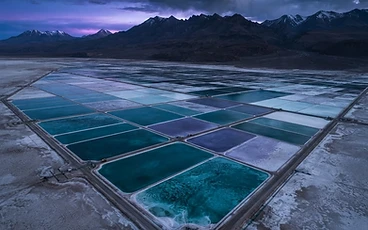
Ignacio Blavi: Building Endurance Across Continents to Lift the Lithium Industry
From a third-generation real estate developer who began investing at twelve to the founder of Lithium Sciences, José Ignacio Blavi Aros has built a multi-continental path that connects the Salar de La Isla, direct lithium extraction and solar-powered EV charging.
Written by Dr. Michael Chen — NES, the New Energy Standard Editorial Team

The Dielectric Shield: Managing Surface Potentials in Lithium-Metal Anode Interfaces
As the industry shifts toward lithium-metal anode architectures for next-generation energy density, controlling the microscopic dielectric boundary has become the critical frontier for cycle stability. We explore how engineered interface layers are mitigating dendrite formation to ensure long-term structural integrity in high-capacity cells.
Written by NES, the New Energy Standard Editorial Team


The Borehole Micro-Refinery: In-Situ Ion Enrichment in Deep Crustal Basins
The next frontier of exploration involves moving the refinery to the resource, utilizing in-situ ion enrichment to process lithium at the point of extraction. This technological shift minimizes material transport and enhances the efficiency of deep-crustal brine operations.
Written by NES, the New Energy Standard Editorial Team


The Nanoscale Thermal Reservoir: Phase-Change Engineering in Lithium-Brine Infrastructure
This publication explores the integration of phase-change materials within the infrastructure of lithium brine processing. By turning storage ponds into thermal reservoirs, we can stabilize chemical extraction cycles while contributing to grid-scale energy buffer systems.
Written by NES, the New Energy Standard Editorial Team


The Nanoscale Thermal Lattice: Managing Latent Heat in High-Capacity Battery Packs
As energy density increases, managing the microscopic thermal fluctuations within individual battery cells has become the primary barrier to long-term reliability. We explore how engineered thermal-conductive fillers are transforming battery packs into self-regulating heat sinks.
Written by NES, the New Energy Standard Editorial Team


The Diplomatic Sovereignty of Subsurface Infrastructure Rights
Governments are pivoting from broad mineral concession models to a tiered system of 'subsurface infrastructure rights' to facilitate multi-decade energy storage projects. This regulatory evolution decouples extraction rights from long-term storage viability, creating a stable legal framework for perpetual asset management.
Written by NES, the New Energy Standard Editorial Team


The Phonon Bottleneck: Lattice Vibrations in High-Power Cathode Thermal Management
As battery energy density reaches new limits, managing internal heat dissipation through lattice-level engineering is becoming the critical frontier. We explore how controlling phononic vibration within lithium-metal cathode structures prevents thermal degradation and enables faster, safer discharge rates.
Written by NES, the New Energy Standard Editorial Team


The Jurisdictional Synchronization: Standardizing Multi-Modal Transit Protocols for Lithium Transport
As lithium production expands into increasingly remote global regions, the logistics of transport are shifting from ad-hoc shipping to standardized, inter-modal transit frameworks. We explore how unified regulatory protocols for the movement of hazardous battery-grade materials provide the logistical backbone necessary for a secure global energy transition.
Written by NES, the New Energy Standard Editorial Team


The Diplomatic Sovereignty of Subsurface Taxonomies
Governments are moving beyond standard mineral rights to adopt unified subsurface taxonomies that classify lithium based on chemical potential rather than mere physical volume. This shift standardizes how nations negotiate resource sovereignty, reducing legal friction for multi-decade mining investments.
Written by NES, the New Energy Standard Editorial Team


The Jurisdictional Equilibrium: Standardizing Cross-Border Royalty Frameworks for Lithium Basins
As lithium extraction crosses traditional territorial boundaries, the establishment of harmonized fiscal regimes is becoming the primary mechanism for ensuring long-term industrial investment stability. We examine how unified royalty protocols provide the administrative certainty required for multi-decade infrastructure development.
Written by NES, the New Energy Standard Editorial Team


The Crystalline Lattice: Entropy Mapping in Closed-Loop Electrolyte Regeneration
As high-performance batteries reach the end of their first service life, the industry is moving from simple material extraction to sophisticated molecular restoration. By using entropy-mapping, we can now refresh the ionic potential of degraded electrolytes, ensuring a perpetual circularity for lithium-based energy storage.
Written by NES, the New Energy Standard Editorial Team


The Diplomatic Sovereignty of Subsurface Data Sharing
As lithium extraction moves into complex cross-border basins, the focus of governance is shifting from territorial ownership to the secure, multilateral exchange of subsurface geological data. This evolution is establishing a new paradigm of 'data-sharing sovereignty' that stabilizes regional investment and accelerates project development.
Written by NES, the New Energy Standard Editorial Team

The Micro-Structural Memory: Rejuvenating Brine Reservoirs through Hydro-Thermal Injection
As lithium extraction moves beyond static removal, a new paradigm of 'reservoir rejuvenation' is emerging. By re-injecting mineral-depleted fluids with tailored chemical signatures, producers can maintain the structural integrity and long-term viability of deep-crustal brine aquifers.
Written by NES, the New Energy Standard Editorial Team

The Borehole Metamorphic Clock: Radiometric Dating in Deep-Crustal Brine Reservoirs
Exploration geologists are now applying advanced geochronology to subsurface brine aquifers, moving beyond spatial mapping to understand the temporal evolution of mineral-rich basins. This diagnostic approach allows companies to identify high-grade brine reservoirs by dating the geochemical maturity of their host geological formations.
Written by NES, the New Energy Standard Editorial Team


The Neuro-Lithic Interface: Precision Ion-Doping in Next-Generation Synaptic Semiconductors
As the boundary between energy storage and computational architecture blurs, lithium is emerging as a critical dopant in neuromorphic hardware. This shift moves the mineral beyond the battery cell into the physical foundation of future synthetic intelligence.
Written by NES, the New Energy Standard Editorial Team


The Jurisdictional Symmetry: Standardizing Global Lithium Certification Protocols
As lithium production decentralizes, the industry is shifting from local testing standards to a harmonized international certification framework. This evolution creates a common language for chemical purity and environmental stewardship that transcends borders.
Written by NES, the New Energy Standard Editorial Team


The Diplomatic Sovereignty of Subsurface Data Sharing
As lithium extraction moves into complex cross-border basins, the focus of governance is shifting from territorial ownership to the secure, multilateral exchange of subsurface geological data. This evolution is establishing a new paradigm of 'data-sharing sovereignty' that stabilizes regional investment and accelerates project development.
Written by NES, the New Energy Standard Editorial Team


The Diplomatic Cadastre: Harmonizing Mineral Tenure in Global Lithium Basins
As lithium extraction moves beyond domestic borders, the industry is shifting toward a unified framework of transboundary mineral tenure. We explore how modern cadastral mapping is replacing legal friction with administrative certainty to secure the global lithium supply chain.
Written by NES, the New Energy Standard Editorial Team


The Crystalline Lattice: Symmetry Engineering in Lithium-Iron Phosphate Production
As battery chemistry shifts toward iron-based cathodes, the physical geometry of the crystal structure has become the defining factor in performance. We examine how synthetic nucleation allows for the design of high-stability cathodes that maximize energy throughput.
Written by NES, the New Energy Standard Editorial Team


The Cryptographic Provenance of Geologic Assets: Establishing Digital Asset Integrity
As global lithium supply chains transition toward institutional transparency, the industry is moving to embed immutable digital identities into mineral batches at the point of origin. This shift ensures that every kilogram of lithium is accompanied by a verified history, securing long-term asset trust.
Written by NES, the New Energy Standard Editorial Team


The Ferro-Magnetic Filter: Scaling Adsorption Media in Industrial Lithium Recovery
As lithium production moves toward higher industrial throughput, the mechanical management of adsorption media has become a primary bottleneck. We examine how magnetic-field integration is revolutionizing the recovery phase by stabilizing the flux of active, lithium-selective materials.
Written by NES, the New Energy Standard Editorial Team


The Diplomatic Cadastre: Harmonizing Mineral Tenure in Global Lithium Basins
As lithium extraction moves beyond domestic borders, the industry is shifting toward a unified framework of transboundary mineral tenure. We explore how modern cadastral mapping is replacing legal friction with administrative certainty to secure the global lithium supply chain.
Written by NES, the New Energy Standard Editorial Team


The Metallogenic Clock: Isotopic Fractionation in Lithium-Bearing Hydrothermal Systems
Exploration geologists are increasingly moving beyond structural mapping to employ precise isotopic fractionation analysis. This diagnostic method allows for the identification of lithium 'sweet spots' within hydrothermal systems that were previously invisible to conventional survey techniques.
Written by NES, the New Energy Standard Editorial Team