The Shift Toward In-Situ Extraction
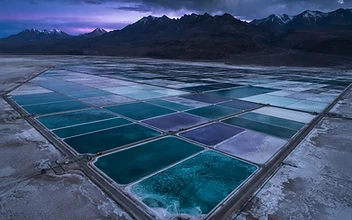
Historically, the lithium industry has relied on a bifurcated process: extraction at the brine field, followed by the logistical burden of transporting dilute mineral-rich fluids to centralized, large-scale refining facilities. As exploration companies target deeper, more complex aquifers, this traditional model is facing pressure due to infrastructure costs and the energy intensity of moving high volumes of fluid. The industry is now pivoting toward the 'Borehole Micro-Refinery'—an architectural shift that embeds refining modules directly into the extraction borehole.
Advancing In-Situ Enrichment
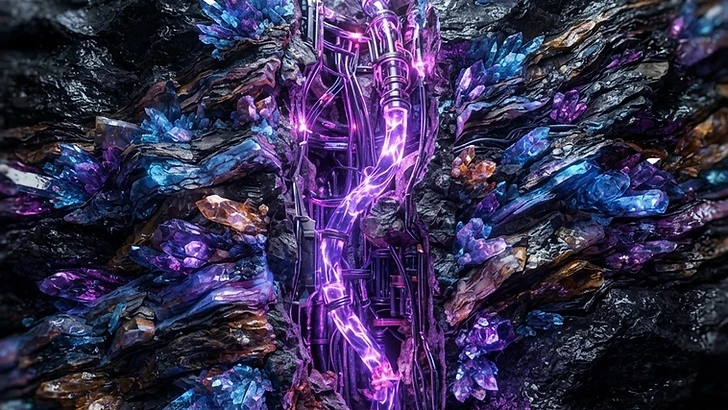
Instead of pumping raw brine to surface ponds, in-situ enrichment utilizes modular, down-hole ion-exchange cartridges. These units operate within the borehole, capturing lithium selectively before the fluid even reaches the surface. By performing the first, most energy-intensive stage of separation at the point of discovery, companies significantly reduce the amount of water and energy required for pumping and processing.
This technology relies on three core components:
- Selective Adsorption Media: Engineered polymers placed within the borehole that preferentially capture lithium ions while allowing host salts and minerals to remain in the aquifer.
- Precision Flow Modulation: Automated valves that manage the velocity of brine influx, ensuring maximum contact time between the fluid and the adsorbent media.
- Real-time Geochemical Monitoring: Integrated sensors that provide continuous data on fluid concentrations, allowing operators to adjust the extraction path dynamically to avoid dilution and maintain purity.
Strategic Implications for Exploration
This shift towards in-situ refinement changes how exploration companies evaluate the 'grade' of a prospect. In the past, a deposit was judged on its total volume and concentration. Now, exploration geologists are also evaluating the 'rheological maturity' of the aquifer—specifically, how well the host rock supports modular, down-hole infrastructure. Deposits that were previously considered marginal due to their depth or the complexity of their brine chemistry are becoming high-value assets because they are better suited for localized, modular refinement.
By decentralizing the refining process, exploration firms are building more resilient projects. Modular units can be scaled according to the performance of individual boreholes, reducing the need for massive, upfront investment in centralized facilities that take years to construct. This agility allows for a more incremental expansion of capacity, synchronized precisely with the geological behavior of the basin.
Operational Sustainability
Integrating the refinery into the borehole architecture also drastically reduces the environmental footprint of lithium operations. By keeping the processing loop closed and largely underground, producers minimize surface disturbance and reduce the risk of evaporative loss or contamination. This approach transforms a traditional mineral extraction site into a precise, technological instrument that interacts with the subterranean environment with minimal interference.
Why it matters
The move toward in-situ, borehole-based refinement represents the maturation of lithium from a commodity-based extraction industry to a high-precision chemical infrastructure sector. By aligning the point of extraction with the point of refinement, we are not only increasing the efficiency of the global supply chain but also ensuring that the lithium fueling our energy transition is produced with the highest possible degree of resource stewardship and technical accuracy, independent of the volatility of macroeconomic cycles.