The Shift from Storage to Computation
For the past two decades, the narrative of lithium has been defined almost exclusively by its capacity to store and release kinetic energy in battery systems. However, a quiet, fundamental evolution is underway in semiconductor physics. Lithium is now being integrated into the lattice of transition metal oxides to create 'memristors'—circuit elements that possess memory and mimic the synaptic behavior of biological neurons. This represents a pivot from lithium as a fuel source to lithium as a functional logic component in high-performance computing.
Atomic-Level Precision in Dopant Engineering
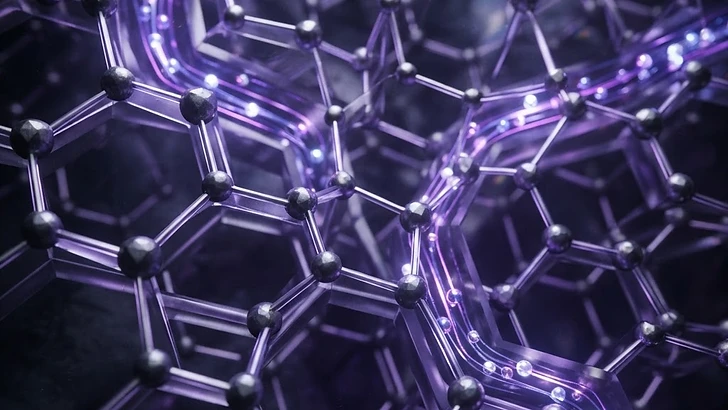
Unlike the bulk consumption of lithium in EV batteries, the use of lithium in neuromorphic architectures requires extreme precision. By injecting specific concentrations of lithium ions into thin-film metal oxides, engineers can create 'ion-tronic' devices that exhibit non-volatile state changes. When a voltage is applied, the lithium ions migrate within the crystalline host, effectively acting as an analog synaptic weight.
This movement is not merely a charge transfer; it is a physical, structural adaptation of the hardware to the data it processes. This allows for:
- Weight Stability: Permanent, low-energy storage of neural network parameters.
- Adaptive Latency: Reducing the power required for 'inference'—the process where AI identifies patterns—by orders of magnitude compared to traditional binary transistors.
- Structural Plasticity: Enabling hardware that can physically modify its own signal pathways based on cumulative historical inputs.
The Infrastructure of Cognitive Hardware
Transitioning lithium into the semiconductor supply chain requires a departure from traditional battery-grade purity protocols. Neuromorphic applications demand 'Electronic-Grade' lithium, where impurities are measured in parts-per-billion. This has necessitated the development of high-vacuum, atomic-layer deposition (ALD) techniques. Producers are now partnering with silicon-foundry operators to create a new pipeline: the 'Lithium-Logic Supply Chain.' This infrastructure ensures that lithium is not just a commodity that degrades in a vehicle, but a stable, permanent component of the world’s most advanced artificial intelligence hardware.
Scaling the Cognitive Infrastructure
As we integrate these ion-doped semiconductors into global data centers, the necessity for a consistent, high-purity supply of lithium becomes an existential requirement for the tech sector. This is not about the quantity of lithium needed—which is significantly lower than in electrification—but the unprecedented quality control required to build 'brain-like' hardware. The integration of lithium into these pathways will turn standard high-performance chips into energy-efficient, adaptive machines that essentially 'remember' the information they process through the movement of ions within their own crystalline structure.
Why it Matters
This evolution represents a profound expansion of lithium's value proposition. By becoming an active agent in the logic and memory architectures that underpin the modern digital economy, lithium transcends its role as a temporary energy storage medium. It becomes the foundational material for the next generation of cognitive systems, ensuring that the mineral remains an indispensable, high-value asset in a world increasingly powered by neural-adaptive technology.