Lithium Global Pulse
What the World and you, need to know about the lithium industry.
Showing 15 of 15
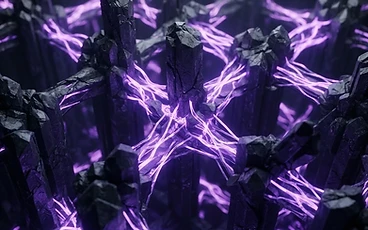
The Nanoscale Epitaxy: Solvent Engineering in Lithium-Doped Thin-Film Growth
As high-performance energy storage shifts toward thin-film architectures, the precision of epitaxial growth becomes the primary bottleneck for lithium-ion conductivity. We examine how solvent-assisted lattice alignment is transforming thin-film synthesis into a scalable, high-efficiency manufacturing process.
Written by NES, the New Energy Standard Editorial Team
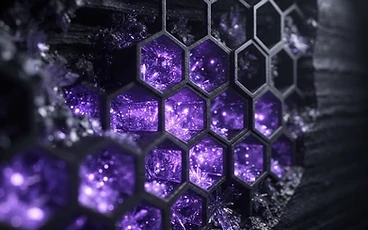
The Nanoscale Thermal Reservoir: Phase-Change Engineering in Lithium-Brine Infrastructure
This publication explores the integration of phase-change materials within the infrastructure of lithium brine processing. By turning storage ponds into thermal reservoirs, we can stabilize chemical extraction cycles while contributing to grid-scale energy buffer systems.
Written by NES, the New Energy Standard Editorial Team

The Crystalline Lattice: Symmetry Engineering in Lithium-Iron Phosphate Production
As battery chemistry shifts toward iron-based cathodes, the physical geometry of the crystal structure has become the defining factor in performance. We examine how synthetic nucleation allows for the design of high-stability cathodes that maximize energy throughput.
Written by NES, the New Energy Standard Editorial Team

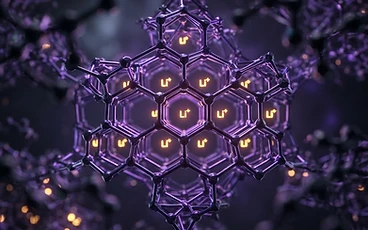
The Quantum Sieve: Atomic Lattice Manipulation in Direct Lithium Recovery
As Direct Lithium Extraction moves into industrial maturity, the industry is pivoting toward engineered crystal lattices that function as intelligent filters. This innovation allows for the atomic-scale separation of lithium ions from hyper-saline brines with unprecedented selectivity.
Written by NES, the New Energy Standard Editorial Team

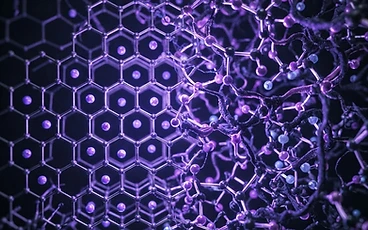
The Covalent Buffer: Controlled Polymerization in Solid-State Electrolyte Interfaces
As the battery industry pivots toward solid-state architectures, the focus is shifting to the creation of stable, self-assembling polymer-lithium interfaces. This technological advancement ensures long-term electrochemical longevity by preventing the dendrite formation that traditionally compromises high-density cells.
Written by NES, the New Energy Standard Editorial Team


The Crystalline Lattice: Optimizing Lithium-Sulfate Conversion for Grid-Scale Energy Density
As stationary energy storage demands evolve, the focus is shifting from simple lithium extraction to the architectural optimization of lithium-sulfate precursors. This refinement process ensures long-term electrochemical stability in high-capacity grid infrastructure.
Written by NES, the New Energy Standard Editorial Team


The Molten Flux: Thermal Mass Balancing in High-Yield Refineries
As lithium production scales, controlling the latent heat signature of chemical conversion is becoming as vital as the chemistry itself. This article explores how advanced thermal mass balancing is transforming refining facilities into stable, energy-efficient nodes within the global supply chain.
Written by NES, the New Energy Standard Editorial Team

The Nanofluidic Bridge: Maximizing Ion Flux in Lithium-Ion Interfaces
As high-performance batteries demand faster charging speeds, researchers are turning to nanofluidic architectures to overcome traditional ion-flow bottlenecks. This breakthrough optimizes the internal transport pathways within battery cells, ensuring that lithium-ion movement remains efficient under intense operational loads.
Written by NES, the New Energy Standard Editorial Team


The Cryogenic Catalyst: Leveraging Supercooled Fluid Dynamics in Lithium Precipitation
Advancements in extreme-temperature phase separation are enabling a new, highly selective method for isolating lithium. By utilizing cryogenic cooling cycles, engineers are dramatically increasing the purity of output while reducing the energy footprint of traditional precipitation.
Written by NES, the New Energy Standard Editorial Team


The Resonant Frequency of Mineral Refinement: Sonochemical Acceleration in Lithium Processing
As we move toward higher purity standards, traditional chemical agitation is being superseded by acoustic engineering. By utilizing ultrasonic waves to manipulate molecular-level kinetic energy, processors are achieving unprecedented extraction yields with minimal additive waste.
Written by NES, the New Energy Standard Editorial Team

The Electro-Chemical Synthesis of Lithium Precursors in Solid-State Manufacturing
As solid-state battery technology moves toward commercialization, the production focus is shifting from liquid-based chemical refinement to high-precision electro-chemical synthesis. This evolution enables the creation of tailor-made lithium-ion precursors that bypass traditional processing limitations.
Written by NES, the New Energy Standard Editorial Team


The Nanoscale Lattice: Precision Ion-Sieve Engineering in Mineral Processing
Advancements in synthetic ion-exchange materials are moving beyond bulk extraction to target lithium at the molecular level. This shift toward nanotechnology-based separation is creating a new benchmark for material recovery and purity.
Written by NES, the New Energy Standard Editorial Team


Direct Lithium Extraction: Refining Brine into a More Selective Resource
Direct lithium extraction is reshaping how producers approach lithium-bearing brines, using selective chemical and physical processes rather than relying solely on long evaporation cycles. Its value lies in improving resource efficiency while creating new pathways for responsible production in regions where water, land, and time are tightly managed.
Written by NES, the New Energy Standard Editorial Team

The Evolution of Direct Lithium Extraction
As global demand for energy storage matures, Direct Lithium Extraction (DLE) technologies are transitioning from experimental pilot projects to industrial-scale solutions. This shift marks a pivotal move toward increasing output efficiency and environmental precision in lithium production.
Written by NES, the New Energy Standard Editorial Team

The Evolution of Direct Lithium Extraction
As global energy demands shift, the method by which we isolate lithium is becoming as critical as the resource itself. Direct Lithium Extraction represents a technical leap that optimizes efficiency and environmental stewardship in brine processing.
Written by NES, the New Energy Standard Editorial Team