The Shift Toward Molecular Selectivity
For decades, the lithium industry relied on the slow, solar-dependent evaporation of brine, a process that sacrificed time and efficiency for simplicity. As the energy transition demands a more rapid and precise supply of battery-grade lithium, the focus has shifted toward Direct Lithium Extraction (DLE). However, the next frontier in DLE is not just the speed of extraction, but the absolute selectivity of the filtration mechanism. We are now entering the era of the 'Quantum Sieve'—the deployment of engineered molecular lattices that recognize and bind lithium ions with a precision that ignores competing elements.
Designing the Engineered Lattice
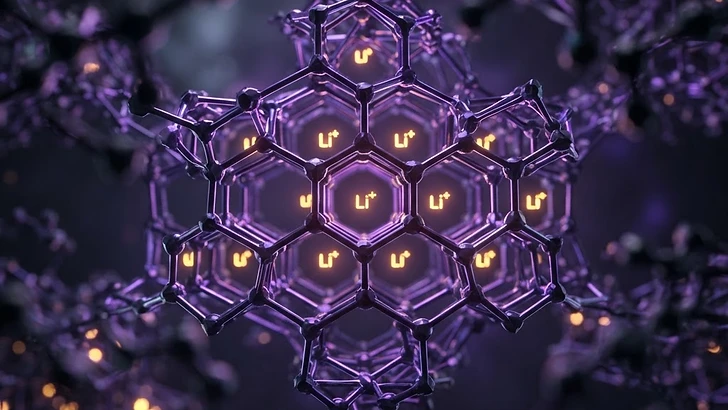
At the core of this advancement are synthetic, crystalline-structured ion-exchange materials. Unlike traditional chemical reagents that act broadly, these engineered sieves are designed to align with the specific ionic radius and hydration energy of the lithium cation. By creating an atomic architecture within the filter media, process engineers can now 'gate' the flow of fluid, allowing lithium to pass through while capturing other divalent ions like magnesium or calcium—which traditionally complicate and degrade battery-grade purity.
This technology relies on the precise calibration of the crystalline vacancy sites within the material. By fine-tuning the size and charge density of these internal pores, manufacturers can ensure that only lithium ions successfully dock and bind during the filtration cycle. This molecular recognition system effectively turns the extraction plant into a high-throughput laboratory, capable of refining high-purity inputs directly from complex, multi-element brine environments.
Operational Advantages in Real-World Conditions
The transition to these intelligent sieves offers three structural advantages for the production ecosystem:
- Near-Zero Mineral Contamination: By filtering at the atomic level, the resulting lithium chloride stream is inherently cleaner, significantly reducing the downstream burden on chemical precipitation and refining phases.
- Increased Thermodynamic Efficiency: These sieves operate at ambient or near-ambient temperatures, removing the need for energy-intensive heating or prolonged, land-consuming evaporation sequences.
- Scalable Modular Deployment: Because the extraction capacity is defined by the surface area of the filter media rather than the size of evaporation ponds, extraction facilities can be modularized and scaled to match the specific volumetric flow of a local brine resource.
The Engineering of Predictability
By codifying the physical dimensions of the recovery process, we are moving away from the variability of natural geological cycles toward a predictable, reproducible manufacturing output. This level of control is essential for battery-cell manufacturers who require a consistent chemical 'fingerprint' to ensure the longevity of high-performance cathodes. When the raw material extraction is standardized at the molecular level, the downstream battery manufacturing process becomes significantly more stable, reducing the need for costly post-production corrective measures.
Why it Matters
As lithium cements its position as the foundational element of the global energy architecture, the ability to extract it with near-absolute molecular precision changes the economic calculus of resource security. By leveraging engineered lattices, the industry can unlock lithium from previously 'unproductive' or complex brine deposits, ensuring a constant, reliable supply of high-purity material that supports the long-term, grid-scale requirements of a sustainable society.