Lithium Global Pulse
What the World and you, need to know about the lithium industry.
Showing 16 of 16


The Nanoscale Thermal Reservoir: Phase-Change Engineering in Lithium-Brine Infrastructure
This publication explores the integration of phase-change materials within the infrastructure of lithium brine processing. By turning storage ponds into thermal reservoirs, we can stabilize chemical extraction cycles while contributing to grid-scale energy buffer systems.
Written by NES, the New Energy Standard Editorial Team


The Phonon Bottleneck: Lattice Vibrations in High-Power Cathode Thermal Management
As battery energy density reaches new limits, managing internal heat dissipation through lattice-level engineering is becoming the critical frontier. We explore how controlling phononic vibration within lithium-metal cathode structures prevents thermal degradation and enables faster, safer discharge rates.
Written by NES, the New Energy Standard Editorial Team

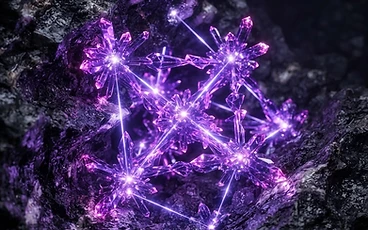
The Spectral Fingerprint: Utilizing Laser-Induced Coherent Raman Scattering in Exploration
As exploration for concealed lithium pegmatites moves beneath deep surface cover, the industry is adopting laser-induced coherent Raman scattering to identify mineral signatures without physical sampling. This technique provides a non-invasive, high-resolution diagnostic tool to map subsurface ore bodies with unprecedented spatial accuracy.
Written by NES, the New Energy Standard Editorial Team

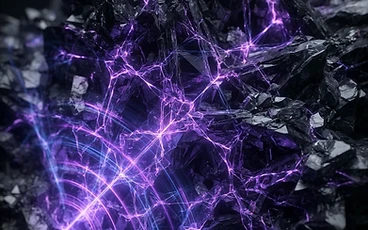
The Haptic Resonance of Subsurface Mapping: Seismic Vibrational Analysis in Deep-Crustal Prospecting
Exploration for lithium is moving beyond static imaging to embrace active seismic resonance, allowing geologists to 'hear' the structural integrity of subsurface reservoirs. This dynamic approach transforms deep-crustal characterization into a high-fidelity diagnostic tool for long-term mineral extraction planning.
Written by NES, the New Energy Standard Editorial Team

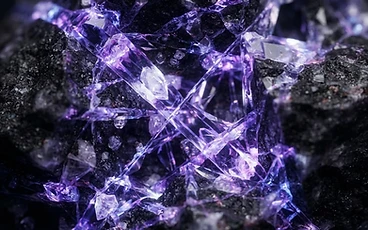
The Isotopical Signature: Temporal Dating in Pegmatite Emplacement
Geological exploration is evolving from descriptive mineralogy to chronostratigraphic precision. By leveraging radiogenic isotope analysis, explorers can now pinpoint the exact cooling age of lithium-bearing pegmatites, dramatically narrowing the search for high-grade deposits.
Written by NES, the New Energy Standard Editorial Team

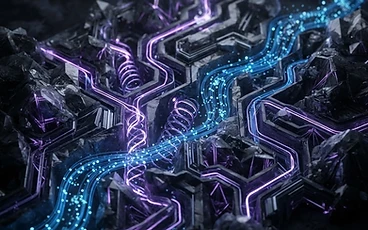
The Optic of Micro-Fluidics: Laminar Flow Control in Brine-to-Battery Refining
As lithium refining moves toward modular, high-throughput systems, the science of laminar flow is becoming the critical differentiator in extraction efficiency. We explore how micro-fluidic channel engineering optimizes the contact time between chemical reagents and lithium-rich brines.
Written by NES, the New Energy Standard Editorial Team


The Isostatic Pressure Gradient: Compaction Science in Battery-Electrode Fabrication
As high-capacity battery manufacturing scales, the industry is shifting its focus toward the precise application of isostatic pressure during electrode fabrication. This technique optimizes the density of active material films, ensuring superior ion conductivity and structural longevity.
Written by NES, the New Energy Standard Editorial Team


The Semantic Geometry: Standardizing Digital Mineralogy in Asset Valuation
As exploration data becomes increasingly complex, the industry is transitioning toward standardized digital mineralogy. This linguistic and structural framework ensures that geological discovery data remains universally interpretable, transforming raw exploration assets into high-liquidity financial instruments.
Written by NES, the New Energy Standard Editorial Team


The Gravimetric Sieve: Density-Based Separation in Spodumene Beneficiation
As high-grade hard-rock lithium deposits become deeper and more mineralogically complex, the industry is refining gravity-based separation techniques to increase recovery yields. We explore how density-driven mechanical engineering is establishing a more efficient baseline for primary ore concentration.
Written by NES, the New Energy Standard Editorial Team


The Electro-Kinetic Signature: Monitoring Surface Crystallization for Resource Forecasting
As exploration techniques advance, the ability to monitor the real-time crystallization patterns in lithium-rich saline environments is providing a new predictive tool for resource valuation. This approach moves beyond historical geological records to offer a dynamic view of how reservoirs evolve under changing climate and extraction pressures.
Written by NES, the New Energy Standard Editorial Team

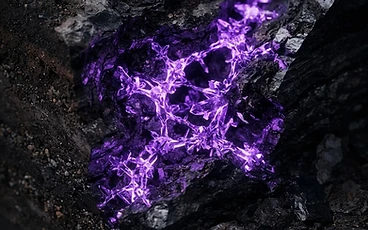
The Algorithmic Prospector: Machine Learning and the Predictive Discovery of Pegmatites
As surface-level exploration reaches a point of diminishing returns, the industry is turning to machine learning models to synthesize disparate geological datasets. This new predictive paradigm allows for the identification of lithium-bearing pegmatites buried under deep glacial till and heavy sediment cover.
Written by NES, the New Energy Standard Editorial Team


The Cryptographic Provenance: Securing Lithium Integrity Through Immutable Ledgering
As lithium matures into a core strategic asset, the industry is adopting advanced distributed ledger technology to verify the chemical identity and environmental origin of every batch. This shift transforms raw material verification from a manual audit into a real-time, trustless data stream.
Written by NES, the New Energy Standard Editorial Team


The Hydrologic Equilibrium: Integrating Watershed Management into Exploration
As exploration moves into increasingly arid and sensitive ecosystems, the industry is adopting a 'water-neutral' approach to mineral discovery. This paradigm shift links geological prospecting with hydrological stewardship to ensure that lithium extraction remains compatible with local environmental sustainability.
Written by NES, the New Energy Standard Editorial Team

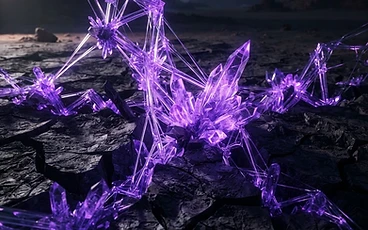
The Pedology of Potential: Mapping Soil Chemistry for Lithium Exploration
Exploration for lithium is moving beyond deep-crustal seismic analysis to the study of regolith and surface soil chemistry. By analyzing ionic signatures in the shallowest layers of the earth, geologists are identifying blind lithium deposits with unprecedented precision.
Written by NES, the New Energy Standard Editorial Team

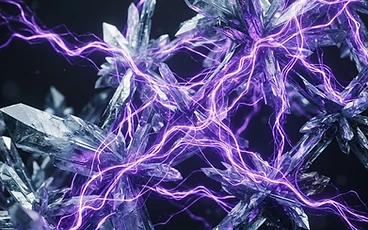
The Silent Vanguard: Understanding Lithium Mineral Exploration
Lithium exploration is the foundation of the global energy transition, transforming geological potential into the essential building blocks of a sustainable future. By shifting our focus from market volatility to the long-term science of resource identification, we can appreciate the strategic imperative of securing our mineral supply chains.
Written by NES, the New Energy Standard Editorial Team


The Invisible Horizon: Deciphering the Geometry of Lithium Deposits
Exploration is the foundational architecture of the energy transition. Understanding the geological complexity of lithium-bearing minerals allows for a more stable and sustainable supply chain for the decades to come.
Written by NES, the New Energy Standard Editorial Team