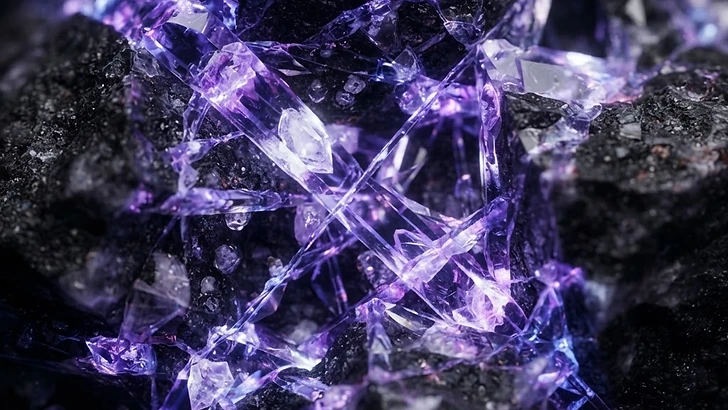
The Chronological Shift in Exploration
For decades, lithium exploration relied heavily on surface reconnaissance and broad geophysical surveys. While effective for identifying mineralogical anomalies, these methods often struggled to differentiate between barren granitic bodies and the highly evolved, lithium-enriched pegmatites that constitute world-class assets. The industry is currently undergoing a paradigm shift, transitioning from visual identification to the application of high-precision radiogenic geochronology as a predictive exploration tool.
The Utility of Radiogenic Markers
Pegmatites—the primary host for spodumene—are formed during the final, volatile stages of magma crystallization. Because these formations represent a cooling process that occurs over specific geological timescales, the 'age' of the mineral body is a direct indicator of its chemical maturity.
By utilizing specialized dating techniques, such as the U-Pb (Uranium-Lead) analysis of accessory minerals like zircon or columbite-tantalite, geologists can distinguish between different intrusive pulses within a single region. This allows exploration teams to:
- Filter Out Background Noise: Quickly discard 'barren' pegmatites that do not align with the known metallogenic cooling window of fertile, lithium-rich intrusions.
- Map Subsurface Potential: Extrapolate the depth and orientation of pegmatite dyke swarms based on the cooling trajectories revealed by isotopic data.
- Optimize Drilling Expenditures: Focus capital on targets with the highest probability of containing the specific spodumene-rich phase-assemblages required for battery-grade feedstock.
Integrating Geochronology into the Exploration Pipeline
This methodology is not merely academic; it is becoming a critical component of the exploration workflow in remote, covered environments like the Canadian Shield or the Yilgarn Craton of Australia. By creating a 'temporal map' of a region, exploration companies can layer geological time-data over existing magnetic and gravity surveys. This creates a high-fidelity model that effectively strips away the obfuscation caused by glacial till or deep weathering profiles.
Furthermore, the standardized nature of isotopic dating provides an objective, tamper-proof metric for asset valuation. When a prospect is backed by precise geochronological data, the risk associated with exploration uncertainty is significantly lowered, creating a more stable investment environment. This data-driven approach moves the sector away from the 'wildcat' style of discovery and into a predictable, engineering-led discipline.
Why It Matters
The long-term value of lithium is intrinsically linked to the reliability of the global supply pipeline. By mastering the chronological science of mineral emplacement, the industry can secure the next generation of high-grade assets with far greater accuracy than before. This shift to precision geochronology ensures that the lithium supply chain remains grounded in deep, empirical geological reality, protecting the market from the boom-and-bust cycles typical of less sophisticated extraction industries.