Beyond Traditional Mapping
For decades, lithium exploration has relied heavily on surface geochemistry and broad-brush geophysical surveys. While these methods served the industry well during the discovery of exposed ore bodies, they are increasingly limited in regions where the most promising mineral reserves are buried under meters of glacial till, thick vegetation, or sediment. To reach the next generation of supply, exploration agencies are pivoting toward Laser-Induced Coherent Raman Scattering (LI-CRS), a sophisticated diagnostic methodology that allows for the detection of spodumene and lepidolite at depths previously considered unreachable.
The Physics of Detection
Coherent Raman scattering functions by using pulsed laser beams to interact with the molecular vibrations of mineral lattices. Unlike standard reflection-based spectral analysis, which is often distorted by atmospheric moisture or surface debris, LI-CRS generates a resonant molecular response from subsurface minerals. This signal is effectively immune to the noise of the surrounding rock matrix.
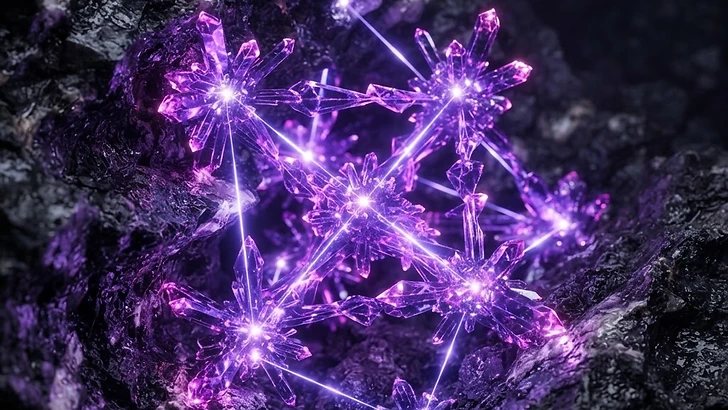
By deploying these laser-based sensors on autonomous ground platforms, geologists can perform 'spectral tomography' of a prospect area. The resulting data is not just a coordinate point; it is a three-dimensional map of the subsurface crystalline environment. This allows exploration teams to define the geometry of a pegmatite dyke—its dip, strike, and internal concentration—before a single drill bit touches the earth.
Operational Precision
Implementing this technology requires a paradigm shift in field logistics, favoring high-precision data gathering over broad, exploratory grid drilling. The benefits of this approach are threefold:
- Reduced Environmental Footprint: By replacing hundreds of exploratory drill holes with precise spectral mapping, firms minimize the surface disturbance traditionally associated with initial-phase discovery.
- Higher Discovery Confidence: The ability to visualize the interior of a deposit eliminates the 'binary' risk of drilling in barren zones, drastically shortening the timeline from prospect identification to resource classification.
- Data Integration: The spectral signatures captured via LI-CRS are inherently digital, allowing them to be fed directly into existing geological modeling software to create a high-fidelity 'digital twin' of the mineral body.
Refining the Target
This technology acts as a bridge between speculative exploration and proven asset valuation. By identifying the exact crystalline maturity of spodumene within a pegmatite, engineers can predict the processing requirements of the ore before it enters the refinery. This foresight ensures that mining operations are designed specifically for the mineralogy of the deposit, optimizing crush-and-grind energy consumption and reagent usage from the very first day of production.
Why It Matters
Lithium’s long-term value is inherently tied to the reliability of its supply. As the easiest-to-access deposits are industrialized, the industry’s success depends on our ability to look deeper, faster, and with greater environmental sensitivity. By adopting technologies like Laser-Induced Coherent Raman Scattering, the exploration sector is moving from a philosophy of trial-and-error to one of diagnostic certainty. This transition ensures that the mineral feedstock for our global energy storage future is identified with scientific rigor and managed as a high-precision strategic asset.