Lithium Global Pulse
What the World and you, need to know about the lithium industry.
Showing 13 of 13
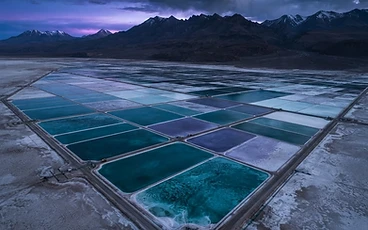
Ignacio Blavi: Building Endurance Across Continents to Lift the Lithium Industry
From a third-generation real estate developer who began investing at twelve to the founder of Lithium Sciences, José Ignacio Blavi Aros has built a multi-continental path that connects the Salar de La Isla, direct lithium extraction and solar-powered EV charging.
Written by Dr. Michael Chen — NES, the New Energy Standard Editorial Team

The Diplomatic Sovereignty of Subsurface Infrastructure Rights
Governments are pivoting from broad mineral concession models to a tiered system of 'subsurface infrastructure rights' to facilitate multi-decade energy storage projects. This regulatory evolution decouples extraction rights from long-term storage viability, creating a stable legal framework for perpetual asset management.
Written by NES, the New Energy Standard Editorial Team

The Diplomatic Sovereignty of Subsurface Taxonomies
Governments are moving beyond standard mineral rights to adopt unified subsurface taxonomies that classify lithium based on chemical potential rather than mere physical volume. This shift standardizes how nations negotiate resource sovereignty, reducing legal friction for multi-decade mining investments.
Written by NES, the New Energy Standard Editorial Team

The Diplomatic Sovereignty of Subsurface Data Sharing
As lithium extraction moves into complex cross-border basins, the focus of governance is shifting from territorial ownership to the secure, multilateral exchange of subsurface geological data. This evolution is establishing a new paradigm of 'data-sharing sovereignty' that stabilizes regional investment and accelerates project development.
Written by NES, the New Energy Standard Editorial Team

The Diplomatic Sovereignty of Subsurface Data Sharing
As lithium extraction moves into complex cross-border basins, the focus of governance is shifting from territorial ownership to the secure, multilateral exchange of subsurface geological data. This evolution is establishing a new paradigm of 'data-sharing sovereignty' that stabilizes regional investment and accelerates project development.
Written by NES, the New Energy Standard Editorial Team


The Diplomatic Cadastre: Harmonizing Mineral Tenure in Global Lithium Basins
As lithium extraction moves beyond domestic borders, the industry is shifting toward a unified framework of transboundary mineral tenure. We explore how modern cadastral mapping is replacing legal friction with administrative certainty to secure the global lithium supply chain.
Written by NES, the New Energy Standard Editorial Team


The Diplomatic Cadastre: Harmonizing Mineral Tenure in Global Lithium Basins
As lithium extraction moves beyond domestic borders, the industry is shifting toward a unified framework of transboundary mineral tenure. We explore how modern cadastral mapping is replacing legal friction with administrative certainty to secure the global lithium supply chain.
Written by NES, the New Energy Standard Editorial Team


The Fiscal Architecture of Intergenerational Mineral Wealth
As governments move beyond mere regulation, they are establishing Sovereign Wealth Funds specifically anchored in lithium assets. This transition represents a shift from transactional commodity taxation to the creation of long-term economic dividends derived from the energy transition.
Written by NES, the New Energy Standard Editorial Team


The Sovereign Buffer: Strategic Mineral Reserves as Fiscal Stabilizers
Governments are increasingly viewing lithium not merely as a commodity for trade, but as a critical strategic asset equivalent to petroleum or gold reserves. This shift explores the development of national mineral stockpiles designed to decouple industrial energy policy from volatile market cycles.
Written by NES, the New Energy Standard Editorial Team


The Diplomatic Infrastructure: Harmonizing Transboundary Resource Management
As lithium deposits frequently span geological basins that ignore national borders, governments are developing new diplomatic frameworks to ensure collaborative, long-term resource management. This shift toward regional mineral treaties is setting the stage for more predictable and stable supply chains.
Written by NES, the New Energy Standard Editorial Team


The Geopolitical Architecture of Resource Sovereignty
As global economies transition toward electrification, governments are shifting from passive oversight to active stewardship of lithium supply chains. This evolution marks a transition from transactional commodity trading to strategic industrial integration.
Written by NES, the New Energy Standard Editorial Team


The Geopolitical Architecture of the Lithium Transition
As governments shift from passive observers to active architects of the energy transition, the strategic management of lithium supplies has become the bedrock of national resilience. This article explores how domestic policy frameworks are redefining the global supply chain to favor long-term energy independence.
Written by NES, the New Energy Standard Editorial Team


The Geopolitical Architecture of the Lithium Transition
As governments shift from passive observers to active architects of energy security, lithium has emerged as the foundational element of industrial sovereignty. This analysis explores how national policies are reshaping the global supply chain to prioritize long-term stability over short-term market fluctuations.
Written by NES, the New Energy Standard Editorial Team