The Thermal Potential of Extraction Infrastructure
In the conventional lithium brine sector, the primary focus is the chemistry of the liquid—the isolation of ionic lithium from complex mineral matrices. However, the vertical infrastructure required to access these fluids—the deep-well borehole—represents a significant, underutilized asset. As we scale the energy transition, there is a mounting requirement for stationary thermal energy storage. By repurposing the structural components of inactive or active extraction boreholes as heat exchangers, the lithium industry is poised to become a dual-output sector: a mineral supplier and a thermal energy provider.
Geothermal Integration Beyond Extraction
The geological structures that host lithium-rich brines are often characterized by high thermal gradients. Traditionally, this heat is treated as a process constraint—something to be managed or dissipated to prevent damage to extraction equipment. The new paradigm, however, treats this subsurface temperature as a strategic resource. By implementing closed-loop heat transfer systems within the existing borehole architecture, operators can capture energy without compromising the chemical flow of the brine itself.
This is not merely about geothermal electricity generation. It is about 'thermal buffering.' By circulating working fluids through the borehole’s casing, facilities can store surplus energy from local renewable grids in the surrounding rock mass. When grid demand peaks and supply drops, this stored heat can be recovered for industrial steam generation or district heating, effectively decoupling mineral output from power grid volatility.
The Engineering of Symbiosis
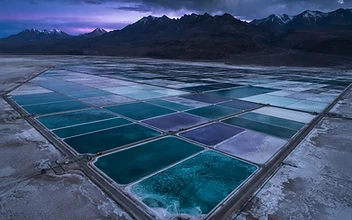
Transitioning to this dual-use model requires a fundamental shift in how we perceive the 'well-field.' Instead of a linear path from reservoir to evaporation pond, the site becomes a node in a regional energy network. The integration involves:
- Advanced Casing Materials: Utilizing thermally conductive, corrosion-resistant alloys that facilitate rapid heat transfer between the reservoir rock and the thermal storage medium.
- Digital Twin Synchronization: Utilizing high-fidelity sub-surface models to monitor the thermo-mechanical stability of the reservoir, ensuring that energy injection does not disrupt the hydraulic flow of the target lithium-bearing aquifers.
- Modular Heat Exchange Modules: Surface-level units that sit adjacent to the processing plant, converting the recovered thermal energy into dispatchable electricity or industrial-process steam.
Operational Synergy and Longevity
The implementation of thermal sequestration transforms the economics of site decommissioning. Instead of viewing a well as an asset that depreciates once the lithium grades reach a certain threshold, the borehole remains a permanent source of energy stability. This shifts the project lifecycle from a single-commodity extraction timeline to a perpetual infrastructure lease, where the site provides long-term value to the local energy landscape regardless of mineral price fluctuations.
This dual-utility approach also creates a more sustainable environmental footprint. By harvesting the thermal energy intrinsic to the reservoir, operations can significantly reduce their reliance on external fossil-fuel-based heating sources, lowering the net-carbon intensity of the primary lithium product. It is a refinement of the extraction philosophy that recognizes the earth as both a mine and a battery.
Why it matters
The move toward co-located thermal sequestration signals the end of the lithium sector as a siloed industry. By integrating energy storage into the bedrock of mining, the sector provides a redundant, structural solution to the intermittency of the energy transition. This evolution ensures that lithium producers remain essential, long-term pillars of the global infrastructure, providing not just the materials for batteries, but the thermal stability required for a fully electrified society.