The Shift Toward Structural Integrity
For the past decade, the industry's discourse on battery technology has centered almost exclusively on ionic conductivity—how quickly and efficiently a lithium ion can travel through an electrolyte. While this remains vital, the next frontier in material science is not merely movement, but permanence. We are seeing a shift toward the development of 'morphological memory' in solid-state ceramics, a breakthrough that treats the electrolyte not as a passive medium, but as a dynamic structural material.
The Architecture of Self-Repair
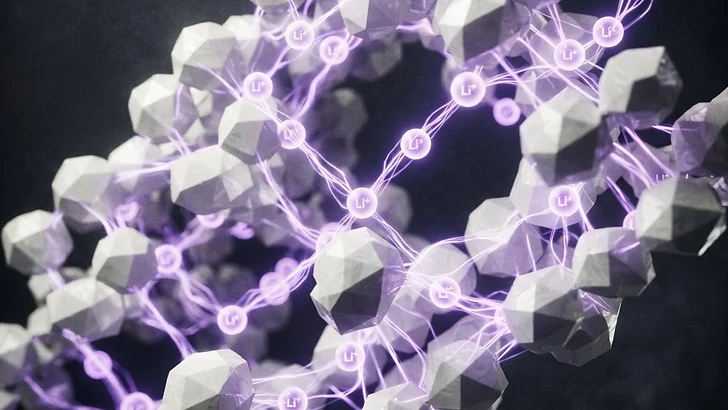
Traditional solid-state batteries have often struggled with the mechanical stresses induced by repeated charging and discharging. Over time, the physical expansion and contraction of the anode can cause micro-fissures within the ceramic separator. By integrating specific lithium-rich crystalline architectures that exhibit a reversible phase-change property, engineers are now creating membranes that 'remember' their original, defect-free state.
When a thermal or mechanical impulse is applied, these lattices utilize the latent potential within the lithium-ceramic bond to heal internal separations. This effectively introduces a regenerative phase into the core of the energy storage system. Key advantages of this material evolution include:
- Enhanced Cycle Longevity: By preventing the propagation of cracks that lead to short-circuiting, self-healing ceramics significantly extend the service life of high-density battery packs.
- Stress-Adaptive Design: The membrane behaves like a flexible lattice, absorbing the mechanical pressure of lithium-metal anodes without sacrificing the integrity of the ion-conduction pathway.
- Thermal Resilience: These materials are engineered to maintain their structural stability across broader temperature ranges, reducing the need for the heavy, energy-draining cooling infrastructure required by older battery formats.
Moving Beyond the Commodity View
This development signifies a move away from the traditional, linear perspective of lithium as a finite, consumable fuel. Instead, we are seeing the rise of lithium as a structural component of sophisticated hardware. By encoding intelligence into the molecular arrangement of the electrolyte, the material itself becomes a participant in the safety and durability of the energy storage unit.
This transition shifts the focus of manufacturing from simple chemical purity to the precise spatial orientation of ions within the ceramic matrix. As we scale this technology, the electrolyte evolves from a liquid component that degrades over time into a permanent, self-maintaining substrate that supports the energy density needs of next-generation infrastructure.
Why it matters
Incorporating structural intelligence into lithium-based components is essential for the long-term viability of the energy transition. By creating batteries that possess inherent mechanical resilience, we move toward a future where energy storage assets are not merely consumable goods with a limited lifespan, but robust, permanent infrastructure capable of sustained performance under the rigorous demands of global electrification.