The Architecture of Abundance
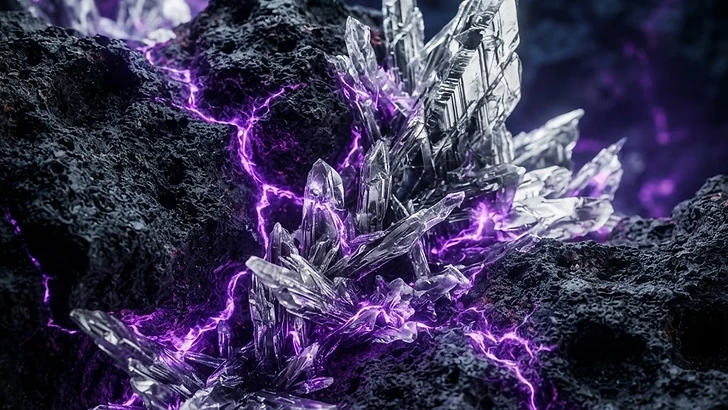
Lithium exploration is fundamentally an exercise in deep-earth forensics. While the general public often envisions lithium solely as a product of massive salt flats—brine deposits—the foundational bedrock of the global supply chain lies in hard-rock mineralogy. Specifically, we are looking at spodumene, a pyroxene mineral found in pegmatites. These are unique igneous rocks formed from the final stages of magma crystallization, often containing the highest concentrations of lithium ever recorded in nature.
Finding these deposits is not as simple as scanning a map for minerals. It requires a sophisticated understanding of how continental crust cools and fractures. As magma rises through the Earth's mantle, it separates. The lighter, volatile-rich fractions move into cracks and fissures in the surrounding host rock. Over millions of years, these fractions cool to form pegmatite dikes—the 'veins' of the earth that act as natural storehouses for lithium.
The Shift to Subsurface Precision
Historically, prospectors relied on surface outcrops to identify lithium-bearing rock. Today, exploration technology has moved into the realm of hyperspectral imaging and seismic tomography. By analyzing the way light reflects off the Earth's surface and how shockwaves travel through the subsurface, geologists can construct a 3D map of these hidden dikes without turning a single spade of dirt.
This shift is critical for several reasons:
- Minimal Surface Disturbance: High-resolution mapping allows for 'surgical' extraction sites, minimizing the footprint on the surrounding environment.
- Higher Quality Yields: By identifying the precise geochemical signature of spodumene, companies can avoid low-grade formations, ensuring that energy spent on mining is directly proportional to the lithium extracted.
- Structural Integrity: Mapping these veins ensures that extraction techniques remain safe and stable, preventing unnecessary structural collapse of the surrounding geology.
Geopolitics of Geology
Lithium exploration is no longer limited to traditional mining hubs like the Lithium Triangle in South America or the outback of Australia. Because pegmatites are found in older, stable continental crust, we are seeing a resurgence in exploration activity across North America and Europe. Regions with crystalline basement rocks that haven't been scrutinized for decades are now being re-evaluated through the lens of modern geochemistry.
This decentralization of the supply chain is a fundamental pillar of a more secure energy transition. By discovering and developing lithium assets closer to the manufacturing centers of electric vehicles and grid-scale storage, the logistics of the energy transition become significantly more efficient. We are effectively building a map of global energy independence, one outcrop at a time.
Moving Beyond the Hype
It is important to understand that exploration is not merely a search for wealth; it is a search for stability. As our global infrastructure shifts from a combustion-based model to an electron-based model, the availability of lithium acts as the 'floor' upon which this new reality is built. The success of the green economy is inextricably linked to our ability to find, map, and responsibly access these geological reservoirs.
We are currently in a "discovery phase" for many untapped jurisdictions. Unlike the rapid, boom-bust cycles seen in gold or oil, lithium exploration is characterized by the long-term, slow-build reality of mineral processing. The goal is not a quick extraction, but a reliable, century-long contribution to the global material balance sheet.
Why it matters
Lithium is the enabling element for the modern energy paradigm. Every discovery made today is a strategic reserve for the next several decades of innovation. By refining our exploration techniques, we are not just finding minerals; we are ensuring that the fundamental building block of the global energy transition remains affordable, accessible, and strategically secure for generations to come.